Bose owns Skullcandy. The Massachusetts audio company announced on October 21, 2026, that it had bought Skullcandy from a fund managed by Mill Road Capital9, a private equity firm in Greenwich, Connecticut, and said the price and other terms would stay confidential. Skullcandy remains a separate brand and will continue to be based in Park City. Its headphones are built by contract factories that its last annual report placed almost entirely in China.
Quick answers
Who owns Skullcandy?
Bose Corporation, which announced on October 21, 2026, that it had bought Skullcandy from a fund managed by Mill Road Capital. The price was not disclosed.
Is Skullcandy a Chinese company?
No. It was founded in 2003 and is still run from Park City. Its products are made by contract factories, mostly in China.
Is Skullcandy publicly traded?
Not since October 2016. It traded on Nasdaq as SKUL from July 2011 until Mill Road took it private, and Bose, which owns it now, is privately held.
Who owns Kodiak Cakes?
L Catterton, which announced the acquisition in May 2021. Existing shareholders, including the founders and management team, kept a significant minority stake.
Who owns Skullcandy now
Bose Corporation. Skullcandy sits in Bose's consumer audio business as a separate brand, alongside McIntosh and Sonus faber, which Bose also owns. The sale followed a partnership that had already put Sound by Bose technology in Skullcandy earbuds and headphones. Lila Snyder, Bose's chief executive, noted in the announcement that Bose is privately held.
How Mill Road bought Skullcandy in 2016
In August 2016 Skullcandy agreed to pay $6.6 million to the company it had already promised to sell itself to, so that it could sell itself to someone else. The someone else was Mill Road, which paid $6.35 a share and took the company off Nasdaq on October 3, 2016. Westfair Communications put the purchase at $196.6 million.
Part of that money was borrowed by Skullcandy itself. On closing day Skullcandy took out an $85 million term loan and drew $13.3 million from a new credit line to help pay for its own shares, according to a filing with the SEC. It is the usual way a private equity purchase gets paid for, and the debt stays with the company that was bought.
Since going private in 2016 Skullcandy has not filed annual reports, and the Orange County Business Journal noted in 2023 that it doesn't disclose its revenue. The last full year it reported, 2015, it had net sales of $266.3 million and about 300 full-time employees.
How did Mill Road beat the other bidder
By paying more after Skullcandy had already signed. On June 23, 2016, Skullcandy agreed to be bought by Incipio for $5.75 a share, about $177 million by Westfair's count. Mill Road then made an offer the Skullcandy board called a superior proposal. Incipio's window to match expired, and Incipio indicated it would not submit a new offer.
On August 23 Skullcandy ended the Incipio agreement, owed Incipio the $6.6 million breakup fee, and signed with Mill Road at $6.35 a share. Mill Road says it got there partly by building a large stake in the public stock first, which gave it an edge over the other bidders. By the time the tender offer closed on September 29, holders of about 79.3 percent of the shares had tendered them.
Is Skullcandy still a Utah company
Yes. Rick Alden and Cris Williams founded Skullcandy in 2003, and its headquarters is in Park City. Bose's announcement of the sale says it will stay there. It did trim the map once. In 2013 it left San Clemente, California, to consolidate its business at the Park City headquarters, the Orange County Business Journal reported.
California came back in a smaller way. In August 2023 Skullcandy opened a 4,500-square-foot satellite office in Costa Mesa, the Orange County Business Journal reported, with about half a dozen people out of more than 100 companywide. Brian Garofalow joined as chief executive in January 2023. The same paper's 2025 profile of him still called Skullcandy the Utah-based headphones maker.
For the rest of the state's speaker and headphone makers, see audio and tech.
Where are Skullcandy headphones made
Overseas, mostly in China, by other companies' factories. In its 2015 annual report, the last one we found, Skullcandy said "substantially all of our products are manufactured in China." It ran an office in Shenzhen to oversee quality and sourcing at those suppliers. The 2023 Orange County Business Journal story still listed a Shenzhen hub among its offices.
Skullcandy is an American company that buys its products from factories in China. Its headphones are not made in Utah.
What happened to Astro Gaming
Skullcandy bought Astro Gaming, the console gaming headset brand, in April 2011, a few months before its own stock started trading on Nasdaq on July 20 that year under the ticker SKUL. Under Mill Road the Astro business went to Logitech. On August 11, 2017, Logitech paid a preliminary $85.0 million in cash for it, buying from AG Acquisition Corporation. Logitech got the gaming headsets. Skullcandy kept the skull.
Who owns the other Utah brands people ask about
Ownership changes, so every line here is dated.
| Brand | Owner | Since | Run from |
|---|---|---|---|
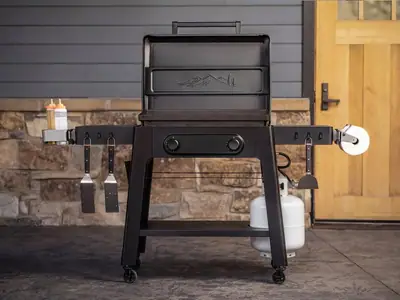
| Traeger | Public on the NYSE as COOK; three investment firms held 55 percent in April 2026 | IPO in 2021 | Salt Lake City |
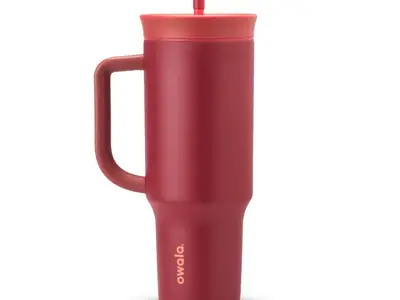
| Owala | Trove Brands15, a privately held company that also owns BlenderBottle | Launched by Trove in March 2020 | Lehi |
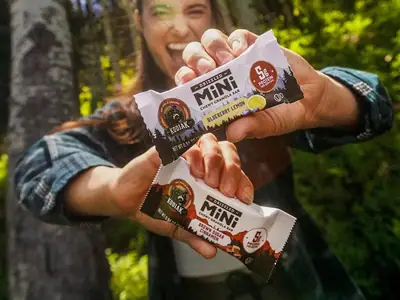
| Kodiak Cakes | L Catterton, with existing shareholders including the founders and management keeping a significant minority stake | May 2021 | Park City |
| High West | Constellation Brands of Victor, New York, for $160 million | October 2016 | Park City |
| Black Diamond | Clarus Corporation, which agreed in 2010 to pay $90 million in cash and began reviewing a possible sale of all or part of its business in May 2026 | 2010 | Salt Lake City |
When High West sold, its founder, David Perkins, told the Park Record17 he expected the distillery to remain in Park City for years. Clarus, for its part, said its review might not end in a sale.
For brands that started here and now run from somewhere else, the famous Utah brands guide covers who left and who moved in.
Brands in this answer