Skullcandy is a consumer tech brand founded in Park City, Utah, in 2003.
Skullcandy started with two mortgages on a house that was already paid off. Rick Alden took them out after inspiration hit him on a chairlift in 2001, as Entrepreneur tells it. The iPod was new, and no headphones were designed for the action sports crowd. In 2003 he and Cris Williams launched the company in Park City.
Alden already knew snowboarding. He designed a step-in boot and binding system in 1995 and sold that company, Device Manufacturing, to Atomic in 1999. His wife, he told Entrepreneur, made the new leap easy: "Listen, the worst thing that could possibly happen is the business fails, and we start all over again. That's just not that bad." Factories took more convincing, and for the first year Skullcandy paid 100 percent of its costs upfront.
The first product, the Portable Link, debuted at CES in 2003 and let you hear music and take phone calls through one set of headphones. Revenue topped $86 million in 2008. After a stretch on Nasdaq, Mill Road Capital took Skullcandy private in 2016, and Bose bought it from Mill Road in October 2026.
The office is still in Park City. The company gives its elevation as exactly 6,434 feet, a number most employers would round.
By 2009 Skullcandy's collaborators ran from Snoop Dogg to Giro, the helmet maker.
Skullcandy is an OG. I still remember my first pair of Crushers, and there was nothing else like them.
Alex
New from Skullcandy
Bose acquires Skullcandy
Bose acquired Skullcandy on October 21. Skullcandy stays a separate brand based in Park City, and the sale price was not disclosed.
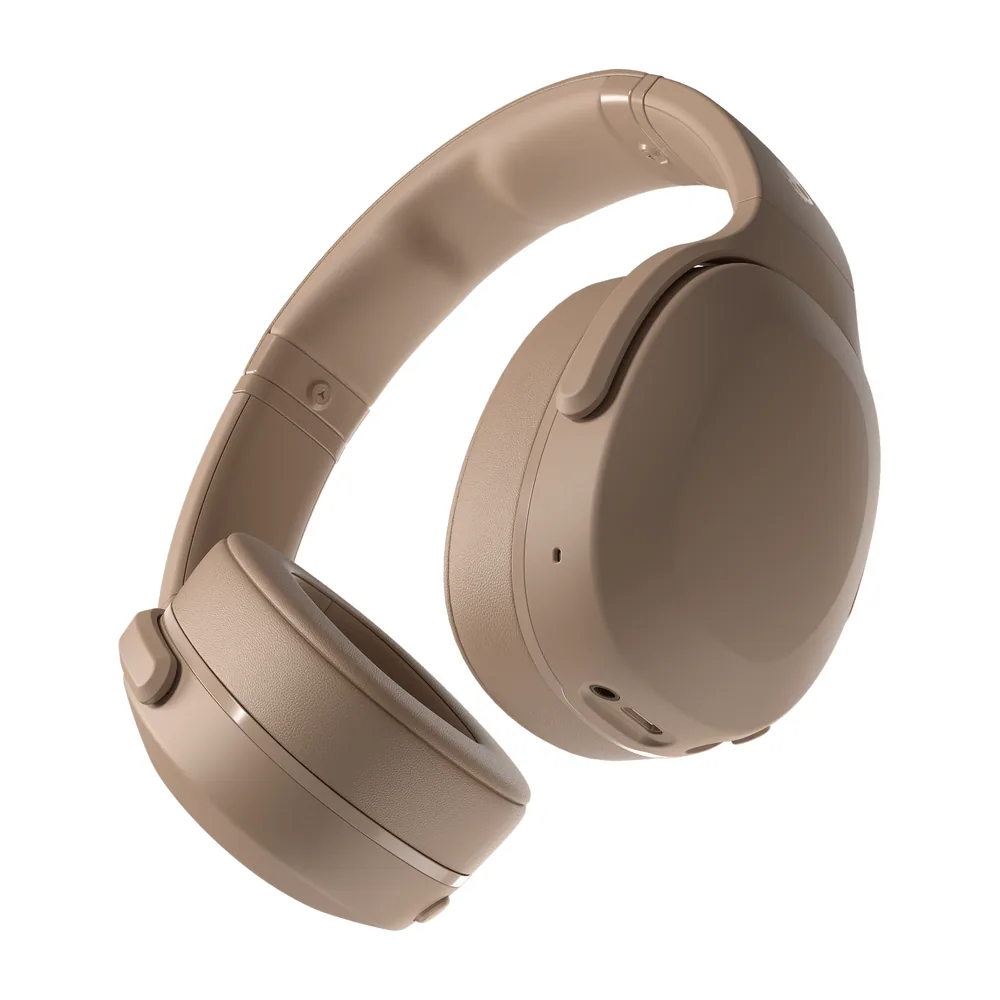
Crusher 1080 ANC headphones with Sound by Bose
Skullcandy says it is the first headphone not made by Bose to use Bose's noise cancelling and spatial audio. It launched at $279.99 and runs up to 50 hours with noise cancelling on.
Crusher 720 headphones
The Crusher 720 pairs Skullcandy's adjustable Crusher bass with THX Spatial Audio for $209.99. Skullcandy rates the battery at up to 65 hours.