Buying from a Utah brand keeps more of your money in Utah, though how much depends on what the company does here. The Salt Lake City study locals quote found that independent retailers returned about half their revenue to the local economy, and chains about a seventh. The better reasons are practical. You can see where the thing was made, and you can drive it back when it breaks.
Quick answers
Does buying local really keep money in Utah?
A 2012 Civic Economics4 study for Local First Utah found independent Salt Lake City retailers returned 52 percent of revenue to the local economy, against 14 percent for chains. It studied stores rather than brands, and it did not compare prices.
What is the difference between made in Utah and founded in Utah?
Made means at least part of the product line is built in Utah. Founded means the company started here, and it may be run from another state now.
Is a brand headquartered in Utah also made in Utah?
Not necessarily. Traeger is run from Salt Lake City, and contract factories in China and Vietnam build its grills.
Why does buying from a nearby company help with repairs?
The people who fix it are often close to the people who built it. At Liberty Safe in Payson, some customer service reps worked on the production floor first.
Does buying local actually help the local economy?
The study people quote around here is Salt Lake City's own. In August 2012 the consulting firm Civic Economics, working for Local First Utah, looked at 15 independent retailers and seven independent restaurants in the city. It compared them with four chain retailers (Barnes & Noble, Home Depot, Office Max and Target) and three national restaurant chains. The independent stores returned an average of 52 percent of their revenue to the local economy. The chains returned 14 percent.
Restaurants showed the same gap from a higher floor. Local ones recirculated 79 percent of revenue, chains 30.
The template is older than that. In 2004 Civic Economics studied Andersonville, a neighborhood on Chicago's north side, for the Andersonville Development Corporation. It compared ten local businesses with ten national chains and found that spending $100 at an independent business created $68 in local economic activity, against $43 at a chain. Measured per square foot of floor space, the independents came out at $179 and the chains at $105.
How reliable are buy local studies?
Read the fine print before quoting these at a family dinner. Local First Utah sponsored the Salt Lake study and the Andersonville Development Corporation commissioned the Chicago one, and the samples were small. Fifteen stores is not many.
They followed the money a business spends after the sale. In Salt Lake that meant payroll plus what the stores bought from local suppliers and service firms. The Chicago count also took in owners' profits and charitable giving. The summaries we read say nothing about shoppers' prices, so they don't tell you whether the local option costs more.
They also studied stores, and this site lists brands. An independent bookshop is local in every column. A Utah brand sold through a national chain splits your dollar. The store keeps its cut on chain terms, and only the wholesale price reaches the company in Utah. What happens to it there depends on which of our tags the company carries.
What "made in Utah" means, and how it differs from founded or headquartered
Every brand on this site carries at least one of four tags. They are not interchangeable, and each says something different about where the money lands.
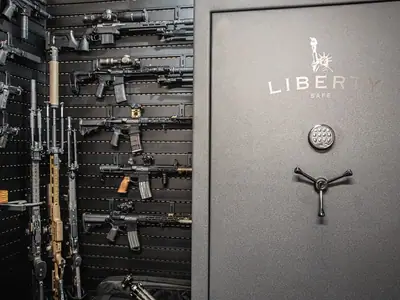
Made means the company builds at least part of its line inside Utah. A warehouse doesn't count, and neither does a design office. This is the tag that puts factory wages here. Liberty Safe says it forms each safe door from one piece of steel in 90 seconds, at a 300,000 square foot plant in Payson. ULA Equipment says it designs, cuts and sews all of its backpacks in its Logan shop.
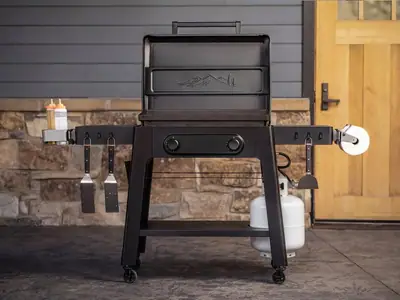
Headquartered means the decisions get made here. Traeger is the cleanest example. It is run from Salt Lake City, and contract factories in China and Vietnam build the grills, about 80 percent of them in China. A Traeger purchase pays for the people at the Salt Lake headquarters. It does not pay a welder in Utah.
North American HQ covers foreign brands that run this continent from a Utah office. Amer Sports, the parent of Salomon, has its North American headquarters in Ogden, where its latest annual report lists a leased 305,735 square foot warehouse and distribution center. In 2019 the state projected 110 new jobs there over five years. Those are Utah paychecks attached to boots and jackets built somewhere else.
Founded means the company started here. Some never left. Others did, which is how Altra, born in an Orem running store, came to be owned by VF Corporation and run from Denver. Buying an Altra today is buying from Denver, with a very good Orem story attached. The site keeps a separate list of brands that left Utah for exactly this reason.
The tags stack. Chums16 was founded in Hurricane in 1983 and still makes its retainers in the original Hurricane factory, and its headquarters is in Salt Lake City. A brand with all three Utah tags is about as far up the ladder as a purchase can go.
Made does not always mean all of it. Springbar17,18 still cuts and sews its USA tents in its Salt Lake City workshop, and Wikipedia says its imported line comes from a partner factory in China. Chums says its Signature products are made in the USA, which leaves room for the rest of the catalog. The Federal Trade Commission has traditionally required that a product advertised as Made in USA be "all or virtually all" made in the United States. The product page usually tells you more than the logo does.
Is it easier to get repairs from a local company?
This is where buying local stops being a feeling. Liberty Safe's6 customer service works inside the Payson plant, and the company says several reps built safes on the production floor first. Call about a warranty and you may get someone who used to make them.
A hiker bought a ULA Catalyst about 300 miles into the Appalachian Trail, then damaged its bottom panel sliding down rocks in the White Mountains. When he called, he recalls, the owner told him to send it back and they would fix it, "real nonchalantly," according to Garage Grown Gear8,33.
Badlands, run from Sandy, says its lifetime warranty covers anything with its name or its red bull skull, and that it will repair every rip or tear "no matter how it got there." The company also says one original employee, Okcha, has handled its warranty repairs for more than two decades. GRIP624 says a worn-out belt can be exchanged for free forever.
Custom work is where distance matters most. DaleBoot26 starts every ski boot with a foot measurement, and if one foot is a little longer or wider, its sales manager told CompanyWeek, that shell gets made a little longer or wider. Its Daleboot USA shop is in Millcreek, which beats mailing your foot anywhere.
A warranty is a promise from whoever owns the company this year. Heritage Outdoor Group bought Badlands in July 2026. The policy on the page is the one to hold them to.
Who actually owns the Utah brand you are buying from?
Locals ask this first, and they should. Our tags describe geography, not ownership. Black Diamond is run from Salt Lake City, and its Express ice screws list the US as their country of origin. Clarus Corporation has owned it since 2010, and in May 2026 Clarus began a review of options that include a sale. The Camalot C4 on the same company's site lists Taiwan.
You can buy the cam anyway. Just know it is a different purchase from a ULA pack, which is cut and sewn in Logan. Every brand page here has an ownership line so you can see which is which.
How to buy Utah made without making it a second job
Start with the made in Utah list if wages here matter most to you, and the headquartered list if you care more about where decisions get made. The map shows what is near you, which matters if you ever plan to walk in with something broken.
Buy direct or at a factory store when you can, since that cuts the national retailer's share out of the split. Taffy Town31 sells from its factory and store in West Jordan, where it says it produces over 20,000 pounds of taffy a day. Champion Safe's parent lists a factory sales outlet in Provo in its latest annual report.
Keep the scale honest, too. Nobody's pack of blister wool saves a town. Still, Wūru Wool once waited until late May for its ski base layers to arrive from a Los Angeles factory, when it was 87 degrees in Salt Lake. It started its own factory with four sewing machines. The company says that since 2022 all of its apparel has been cut, sewn and shipped in Salt Lake City.
Why a company would set up here in the first place is its own story, and we wrote it up in why Utah is good for business. The gear companies get their own history in why so many outdoor companies are in Utah, and the full count of brands by tag is in Utah brands by the numbers.
Brands in this answer