Cataract Oars is a camping and overland brand headquartered in Salt Lake City, Utah.
Cataract Oars are made by a Salt Lake City company that also makes guided missile parts. Its oars date to the mid-1980s and were first built for Western river guides. NRS, the river gear retailer, wrote in 2011 that Advanced Composites Inc. makes armor piercing projectiles too, and it gave the reason for the leap to oars in one line: the people running the place are rafters.
By that account they decided they could make better oars than they could buy. Utah Business later put a name to one of them, product manager Dylan Holt, an avid rafter, who said "we build oars meant to last."
A shaft starts as a spinning polished steel mandrel coated with a release agent. A computer-controlled winder lays strands of fiberglass and carbon, dipped in colored epoxy, up and down the mandrel at set angles, and NRS says the more carbon in the layup, the stiffer the oar. The blanks cure in an oven and the outer layers are ground to the right diameter. After two coats of urethane, the mandrel is forced out and the shaft is cut to length. NRS puts a finished shaft at about 70 percent fiber and 30 percent resin.
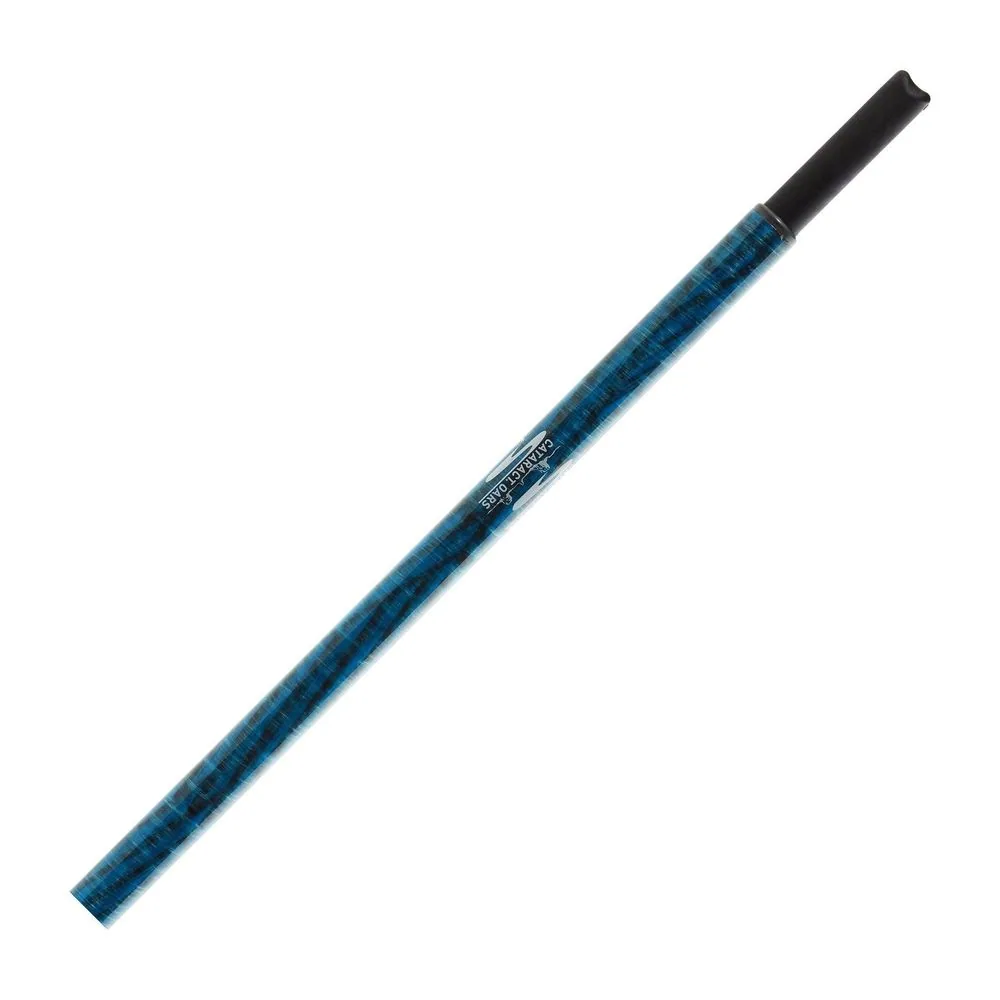
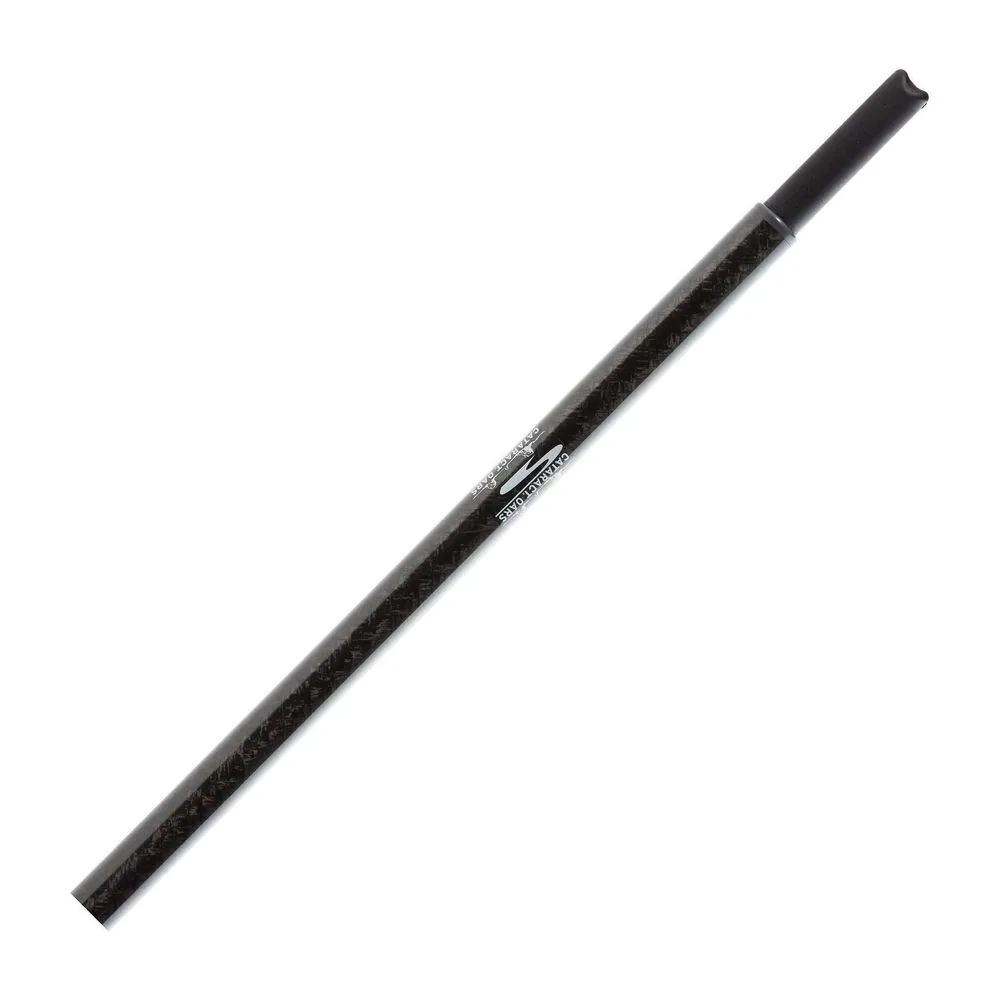
Cataract sells its shafts in several models. In its own words, the SGG, the most popular among river guides, has all the flex of wood oars without the weight, and the SGX is stiffer for large boats in big water. The X Wound has an all-carbon outer layer to cut fatigue. The shop's pages in June 2024 said oars are made to order, with shipping in two to six weeks depending on the model.
The blades are sold separately. The original Cataract blade is 6.25 inches wide, with a polyurethane skin around a lightweight composite foam core, and the shop's page says simply, "This blade floats." NRS wrote in 2011 that Cataract oars are twice as strong as aluminum oars and 40 percent lighter.
Cataract's About page admits the business problem with its own product. Oars that last years, even decades, are "bad for repeat sales," it says, and then it argues that this is just good business.
Advanced Composites also owns Wound Up Composites, whose carbon bike forks come from the same address on Directors Row, and Red Emerald Designs, which makes office and home furniture. Cataract's shop resells other makers' gear too, such as AIRE inflatable kayaks and NRS oarlocks.
The About page lists the Utah Rivers Council and the John Wesley Powell River History Museum among the groups it supports. It signs off with its own advice: "Always pack out more than you pack in."
Each Cataract oar shaft is cut from a 24-foot blank that is wound on a polished steel mandrel and cured in an oven, NRS says.